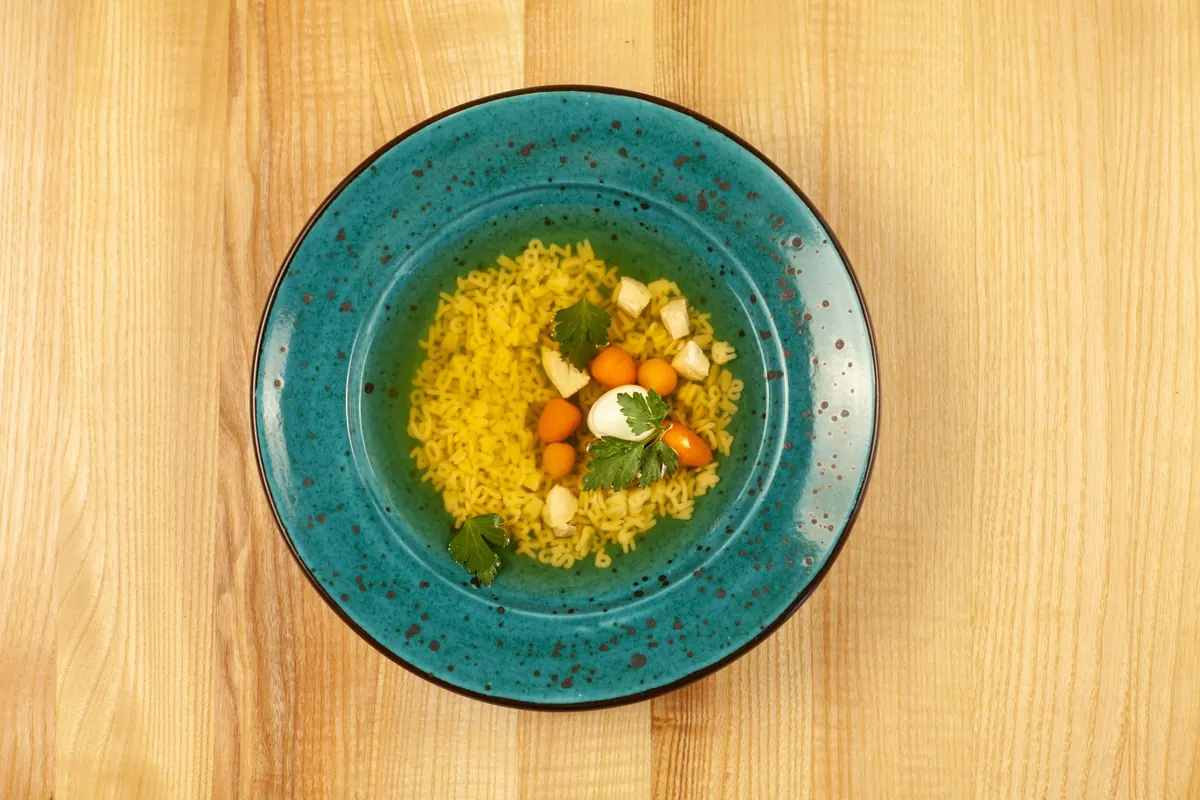
How to Make a Cozy Chicken Noodle Soup from Scratch
A pot of chicken noodle soup isn't complicated. Chicken, water, a few vegetables, and enough time for all of it to turn into something that tastes like someone cared. But the gap between a bowl that's merely fine and one you eat standing at the stove comes down to details: a broth that simmers instead of boils, aromatics that get sweated rather than dumped in raw, and noodles that are cooked with a little attention. This version takes about two hours, most of it hands-off.
Start With the Chicken, Not the Carton
Skip the boxed broth. A whole chicken gives you both meat and liquid in one pot, and the bones do the work. Buy a bird in the 3½ to 4 pound range, or use three pounds of bone-in, skin-on thighs — forgiving and hard to overcook. Skin on matters; fat carries flavor, and the fat you skim off later is what you'll sweat the vegetables in.
Put the chicken in a heavy pot that holds at least six quarts, cover with 12 cups of cold water, and add the aromatics below. Cold water, not hot: it draws more flavor out of the bones as it heats.
What goes in the pot
- 1 whole chicken, 3½–4 pounds, or 3 pounds bone-in thighs
- 12 cups cold water
- 1 onion, halved, skin on — it deepens the color
- 2 carrots and 2 celery ribs, roughly chopped (these get discarded later)
- 4 smashed garlic cloves
- 2 bay leaves, 1 teaspoon black peppercorns, a few sprigs of thyme, a handful of parsley stems
Simmer, skim, and pull the chicken
Bring the pot to a bare simmer over medium heat, then drop it to low. Watch the first ten minutes and skim off the gray foam that rises; that's what clouds a broth. After that, leave it alone. A hard boil makes the broth murky and can flatten its flavor, so keep the surface at a lazy bubble.
A whole chicken is done in 45 to 60 minutes; thighs take 35 to 40. Pull the meat when the thickest part of the thigh reads 165°F, move it to a plate to cool, and let the broth keep going another 20 minutes if you want more depth. When the chicken is cool enough to handle, pull the meat and discard the skin and bones — or save the bones for a second round of broth.
Strain and Skim Before You Season Anything
Set a fine-mesh strainer over a big bowl and pour the broth through. Toss the spent vegetables; they've given everything they have. Now deal with the fat. If you have time, chill the broth for a few hours and lift off the solid cap. Otherwise, ladle it from the surface or drag a paper towel across it. Save two tablespoons of that fat — it's your cooking fat for the next step.
Taste the broth now, before salt or anything else. It should taste clearly of chicken and smell like a Sunday afternoon. It will be undersalted at this point, and that's correct. You want room to season later, after the vegetables and noodles have their say.
Broth is a foundation, not a finished dish. Season it lightly now, then finish the seasoning once everything is in the pot.
Give the Vegetables Their Own Moment
Dice one onion, three carrots, and three celery ribs into pieces roughly the size of a pea — small enough to fit on a spoon with some broth. Heat the reserved chicken fat, or two tablespoons of butter, in the empty pot over medium-low. Add the onion, carrot, and celery with a pinch of salt.
Cook them for 8 to 10 minutes, stirring occasionally, until the onion turns translucent and the carrots start to soften but still hold their shape. Add three minced garlic cloves for the last 30 seconds — any longer and they turn bitter. This step is why the soup tastes layered instead of boiled, and rushing it is the most common mistake.
Noodles: Cook Them Separately, Almost Always
Noodles cooked in the broth release starch and drink up liquid, which is why leftovers turn into stew by morning. Boil them in a separate pot of well-salted water until just shy of al dente, then drain and toss with a drop of oil so they don't clump.
If you're serving the whole pot right now, you can cook the noodles straight in the soup — add an extra cup of broth to account for what they'll absorb, and don't plan on leftovers. Egg noodles, ditalini, or broken spaghetti all work. So does a cup of rice, simmered 15 minutes in the broth.
Simmer the strained broth with the softened vegetables for 10 to 12 minutes, until the carrots are fully tender. Add the shredded chicken for the last few minutes, just to warm it through. Cooked chicken doesn't need to simmer; it only gets stringy.
Finish With Salt, Acid, and Herbs
Now season properly. Add salt in small pinches, stir, and taste after each one. Soup needs more salt than you'd guess, and it needs it in stages rather than all at once. A squeeze of lemon juice or a teaspoon of cider vinegar at the end sharpens everything — if the soup tastes flat, acid usually fixes it before more salt does.
Stir in a handful of chopped dill or parsley off the heat, a few grinds of black pepper, and a tablespoon of butter if you want a slightly richer body. Ladle it over the noodles in bowls. Taste one last time and adjust.
Make It Ahead, Freeze It, Change It Up
The base recipe is a template. Once the broth is in the pot, these swaps all work:
- Ahead of time: the broth keeps four days in the fridge and three months in the freezer. Freeze it without noodles or vegetables for the best texture.
- Weeknight shortcut: make the broth on a Sunday, then the soup comes together in 25 minutes on a Tuesday.
- Ginger and scallion: swap the thyme for a thumb of ginger and finish with
Photo: Роман Нагаевский / Pexels