Comfort Food Showdown: Mashed Potatoes vs. Baked Potatoes
Potatoes have been carrying weeknight dinners for a long time, and two versions do most of the work: the fluffy mound of mashed potatoes and the crackly-skinned baked potato. They come from the same bin at the store, cost about the same, and ask for the same three or four ingredients if you keep things simple. Choose one for tonight and the whole plate shifts. Gravy gets sopped up differently. The oven clock changes. Leftovers behave differently, too. Here is a straight comparison, so you can pick on purpose instead of by habit.
Texture Is the Real Divide
Everything else follows from how these two feel in your mouth, and that comes down to how much you work the potato and how much water stays inside it.
Mashed
Mashed potatoes are engineered. You break the cells open, release starch, and fold in fat and liquid until the whole thing turns into a smooth, spoonable mass. Russets give you the lightest, fluffiest result because they are high in starch and low in moisture. Yukon Golds land in the middle: creamy, a little buttery, forgiving. Waxy reds and fingerlings are the wrong tool here. Mash them and you get a sticky, gluey paste, which is why they belong in potato salad instead.
Baked
A baked potato is the opposite approach: leave it whole and let the oven do the work. The skin dries and crisps, the interior steams itself soft, and the flesh stays structured enough to hold a forkful without collapsing. Heat matters. A medium russet at 425°F needs roughly 50 to 60 minutes, and the flesh finishes better when the potato rests a few minutes after it comes out. Skip the foil if you want that crust. Foil traps steam and gives you a soft, pale skin.
Prep Time and Effort
Mashed potatoes take about 35 to 45 minutes start to finish, and most of it is hands-on-ish: peel, cut into even chunks, simmer 15 to 20 minutes until a knife slides in with no resistance, drain, then mash with warm butter and warm dairy. Then there is a pot, a colander, a masher, and a sink full of starch.
Baked potatoes take longer on the clock but almost none of your attention. Scrub, dry, prick once or twice with a fork, rub with oil, sprinkle with coarse salt, and put them in a hot oven. You can walk away. When you are short on time, microwave them for 6 to 10 minutes until nearly tender, then finish them in a hot oven for 10 to 15 minutes to firm up the skin. It is not identical to a fully oven-baked potato, but on a Tuesday it is close enough.
One practical note for holidays: mashed potatoes can be held over a pot of simmering water, covered, for a while, or kept warm in a slow cooker with an extra splash of milk. Baked potatoes hold beautifully wrapped in a clean towel in a basket. Both buy you flexibility, just in different ways.
Toppings: What Each One Does Well
Mashed potatoes accept flavors inside them. Baked potatoes hold flavors on top of them. That single difference drives most of the decision.
- Butter and cream: Essential for mashed. For baked, butter goes in after you open the potato, not before.
- Sour cream: Whisked into mash for tang, or dolloped on a split baked potato.
- Roasted garlic, horseradish, mustard powder, nutmeg: All fold into mash beautifully. On a baked potato, they get lost unless you mix them into the fluffed interior.
- Chili, broccoli and cheddar, pulled pork, leftover stew, tuna: Baked potato territory. The skin becomes a bowl, and dinner becomes one item.
- Chives, scallions, crisp bacon, grated sharp cheddar: Great on both, but add them at the end so they stay bright.
Whatever you choose, season the inside of a baked potato before you load the top. Cut an X, squeeze the ends, fluff the flesh with a fork, and work in butter, salt, and pepper. Otherwise the bottom half tastes like plain potato while the top half gets all the credit.
Best Uses at the Table
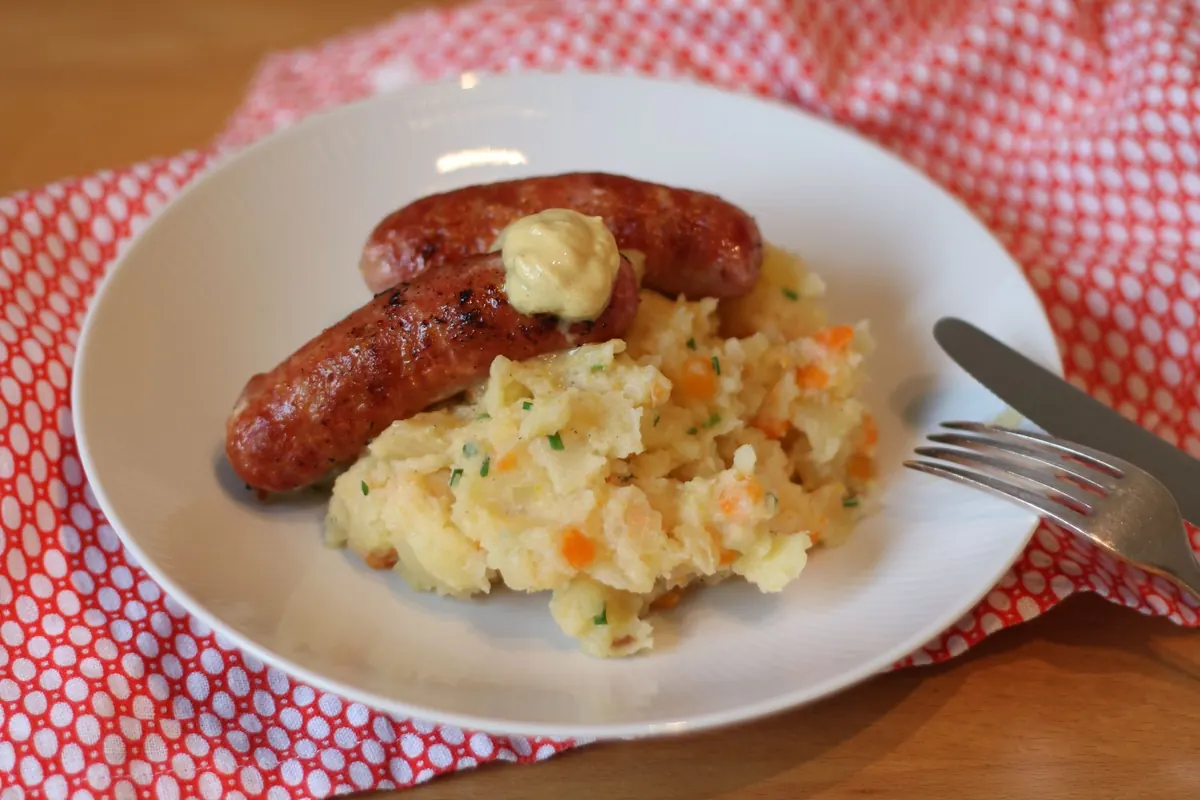
Mashed potatoes are the better partner for anything with sauce or gravy that needs catching: roast chicken, meatloaf, pot roast, braised short ribs, sausages, steak. They also make a fine base for shepherd's pie, and cold leftovers fry into excellent patties the next morning.
Baked potatoes shine when the potato is the meal or when you want a plain counterweight to something strongly flavored. A loaded baked potato with chili and cheese is dinner, no argument. Alongside a grilled steak or a simple roast chicken, it keeps the plate clean and lets the meat lead. And a baked potato bar, with bowls of toppings set out, solves the problem of feeding a crowd with different tastes, including anyone avoiding bread or gluten.
Quick rule of thumb
- Gravy, pan sauce, or a casserole on the menu: mash.
- Feeding people who top their own, or cooking hands-off: bake.
- Want a smooth element against something crisp or chewy: mash.
- Want fewer dishes and a one-item meal: bake.
Technique Fixes Worth Knowing
For mashed potatoes
Start potatoes in cold, well-salted water rather than dropping them into boiling water, so they cook evenly from the center out. Simmer gently; a hard boil roughs up the edges and makes the mash pasty. After draining, let them steam in the colander for a minute or two, then return them to the warm pot over low heat to drive off surface moisture. Warm your milk or cream and melt the butter into the potatoes before the liquid goes in. Cold dairy is one of the most common causes of gluey mash. Use a ricer or food mill for the silkiest texture, a hand masher for rustic, and never a food processor or blender. Salt in layers as you go.
For baked potatoes
Choose firm, evenly sized russets so they finish at the same time. Dry the skins thoroughly after washing, then rub with oil and coarse salt for a crackly crust. Bake at 425°F directly on the oven rack with a sheet pan on the rack below to catch drips, or on a sheet pan if you prefer. It is done when a towel-wrapped squeeze gives slightly and a skewer slides in with no resistance. Let it sit five minutes before opening, and cut lengthwise rather than in half so it stays hot and holds its shape.
How to Decide Tonight
Ask three questions. Is there a sauce on the plate that needs something to soak it up? Do I have 20 minutes of active time, or do I want to walk away? And am I feeding people who will happily build their own? Mashed answers yes to the first. Baked answers yes to the second and third. If you are cooking a holiday spread and the oven is full, mash on the stovetop and bake the potatoes early, holding them wrapped in a towel until the table is ready. Both belong in the rotation. The only real mistake is picking the one that fights the rest of the meal.
Photo: Paula / Pexels